CREATE SOMETHING THAT'S ALL YOU
SMALL-BATCH CO-MANUFACTURING
Turn your recipe, crop, or food idea into a shelf-ready product.
Beth’s Farm Kitchen helps farms, chefs, restaurants, food entrepreneurs, and specialty food brands move from idea to finished product.
Whether you have a surplus crop, a signature sauce, a family recipe, a farm-grown ingredient, or a food product you are ready to scale, we can help you understand what it takes to make it commercially, safely, and beautifully.
We are a Hudson Valley production kitchen built for small-batch food manufacturing, thoughtful co-packing, value-added farm products, and specialty foods with a real story behind them.
FROM IDEA TO FINISHED PRODUCT
Good food ideas need more than a good recipe.
A recipe is a beginning. It is not yet a product.
To become something that can be sold, shipped, stocked, served, gifted, or placed on a retail shelf, a food idea needs process. It needs food safety review, sourcing, production planning, packaging, labeling, batch consistency, pricing, and a realistic sense of what the product needs to become.
That is where Beth’s Farm Kitchen can help.
We work with people who have something worth making and need a trusted production partner to help move it forward.
Sometimes that means producing an existing recipe at commercial scale. Sometimes it means helping shape the product before it is ready for production. Sometimes it means looking honestly at an idea and helping decide whether it is viable at all.
Our job is to help good food become real in a way that works.
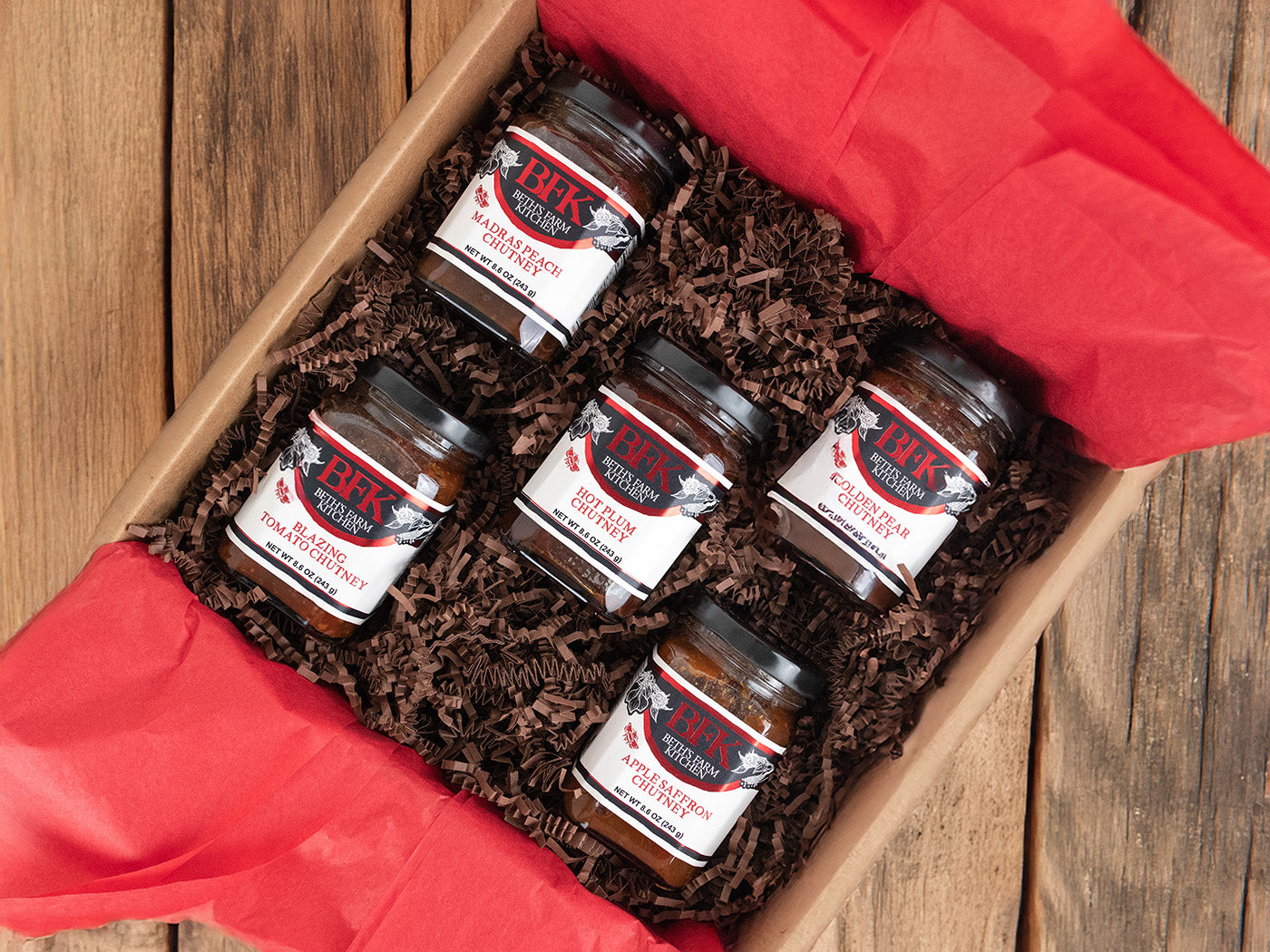
WHAT THIS MEANS
Co-packing, co-manufacturing, and small-batch food production.
People use the words co-packing and co-manufacturing in different ways. We use both because different projects need different kinds of support.
Co-packing
Co-packing is usually the right fit when you already have a product, recipe, or formula and need a professional kitchen to produce, package, jar, bottle, or prepare it for sale.
Co-manufacturing
Co-manufacturing is often a deeper partnership. It may include product development, process planning, ingredient sourcing, troubleshooting, food safety considerations, packaging guidance, and production support.
Small-batch food manufacturing
Small-batch food manufacturing is the broader production work that makes all of this possible. It is where craft, consistency, safety, and commercial practicality meet.
At Beth’s Farm Kitchen, these categories often overlap. The important question is not which term you use. The important question is what you are trying to make and what kind of help you need to make it happen.
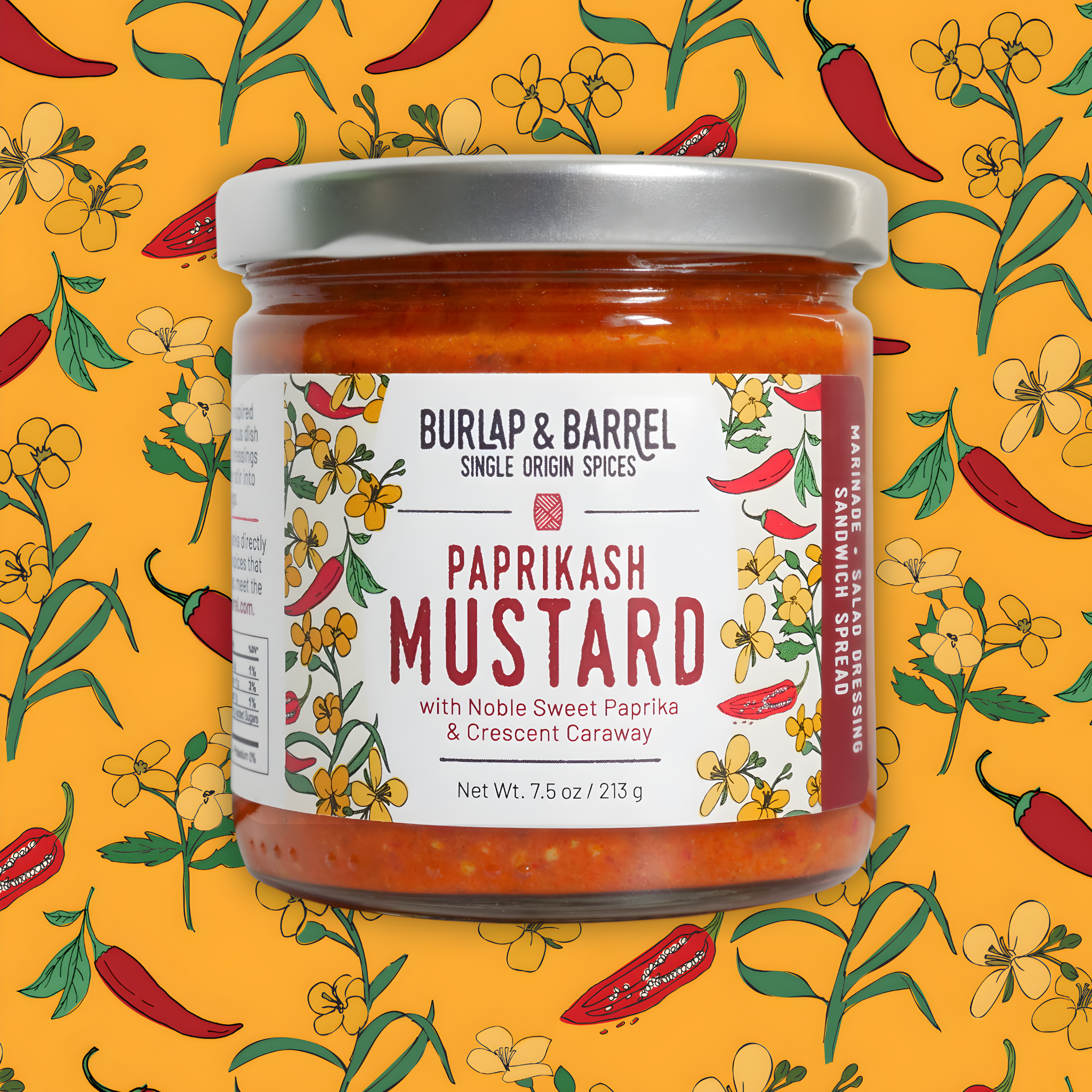
WHO WE WORK WITH
Built for farms, chefs, food brands, and entrepreneurs.
Beth’s Farm Kitchen works with people and businesses who care about ingredients, flavor, process, and story.
We may be a good fit for:
- Farms with surplus or seasonal crops
- Fruit, vegetable, and specialty crop growers
- Food startups and early-stage CPG brands
- Chefs and restaurants with signature sauces or condiments
- Hospitality groups developing custom products
- Specialty food brands looking for small-batch production
- Retailers or farm stores creating branded products
- Nonprofits or organizations developing custom food items
- Entrepreneurs moving from home recipe to commercial production
- Agricultural partners building value-added products
Many of our best projects begin with someone saying, “We have this idea, but we are not sure how to make it real.”
That is a good place to start.
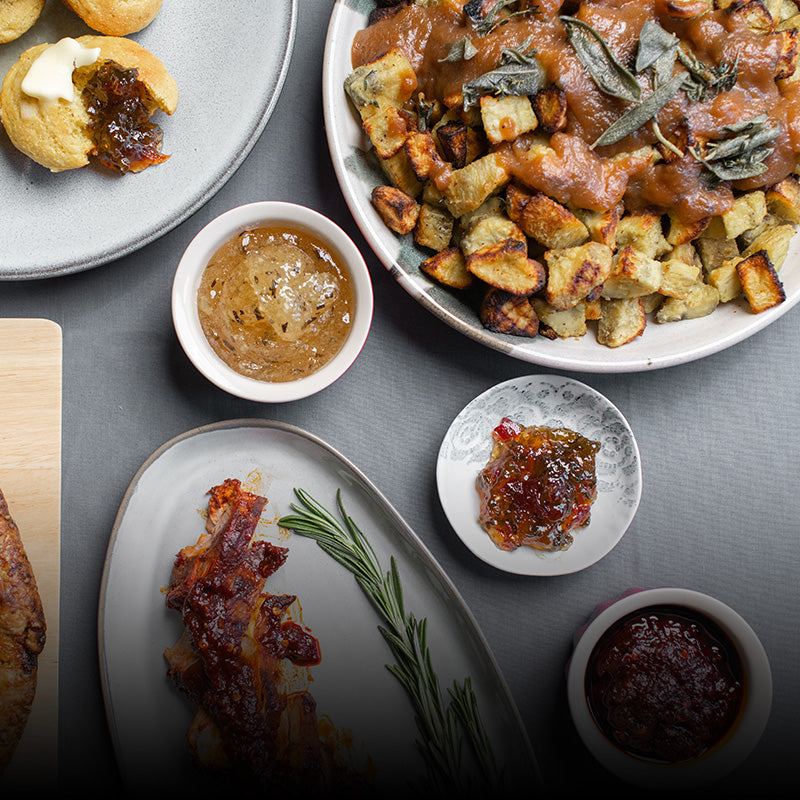
WHAT WE CAN MAKE
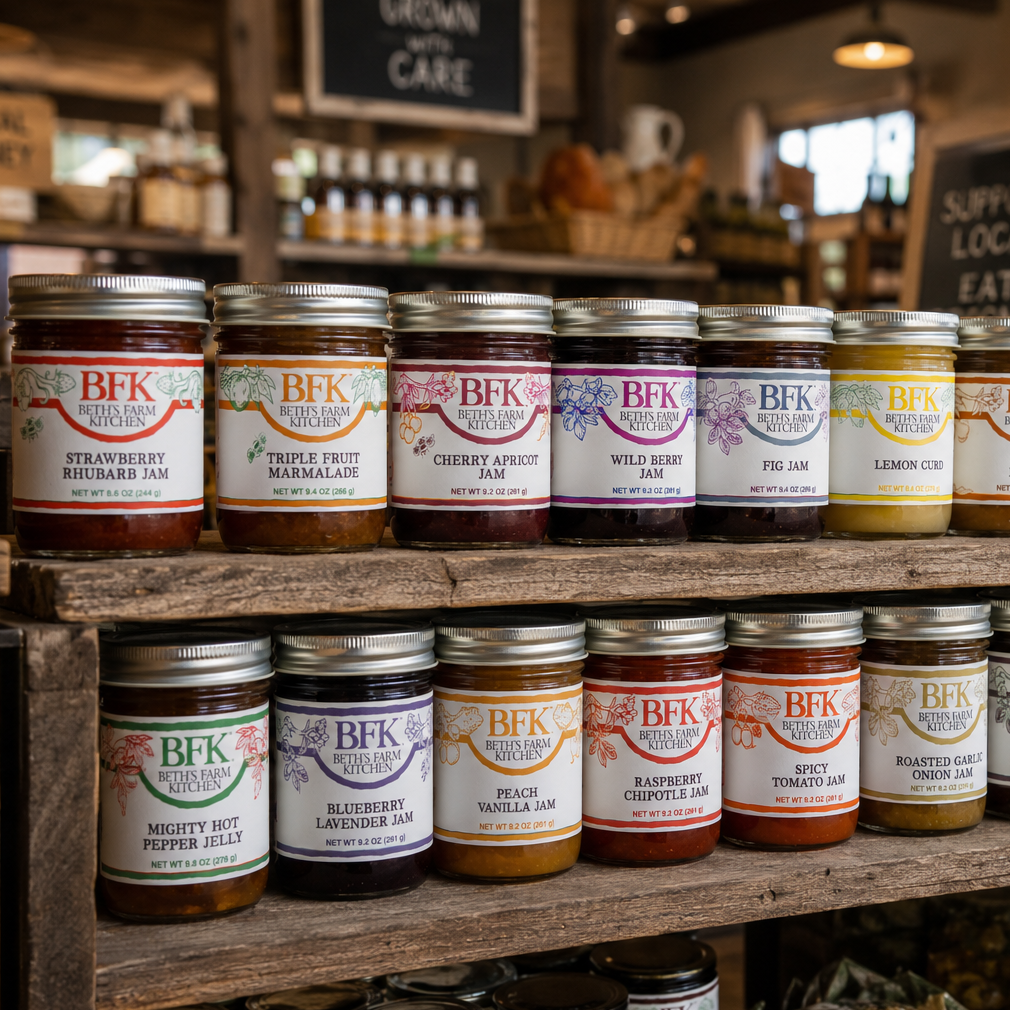
Jams, sauces, condiments, preserves, and value-added farm products.
Beth’s Farm Kitchen is especially well suited for small-batch specialty foods that can be jarred, bottled, packed, or produced within our kitchen environment.
Product categories may include:
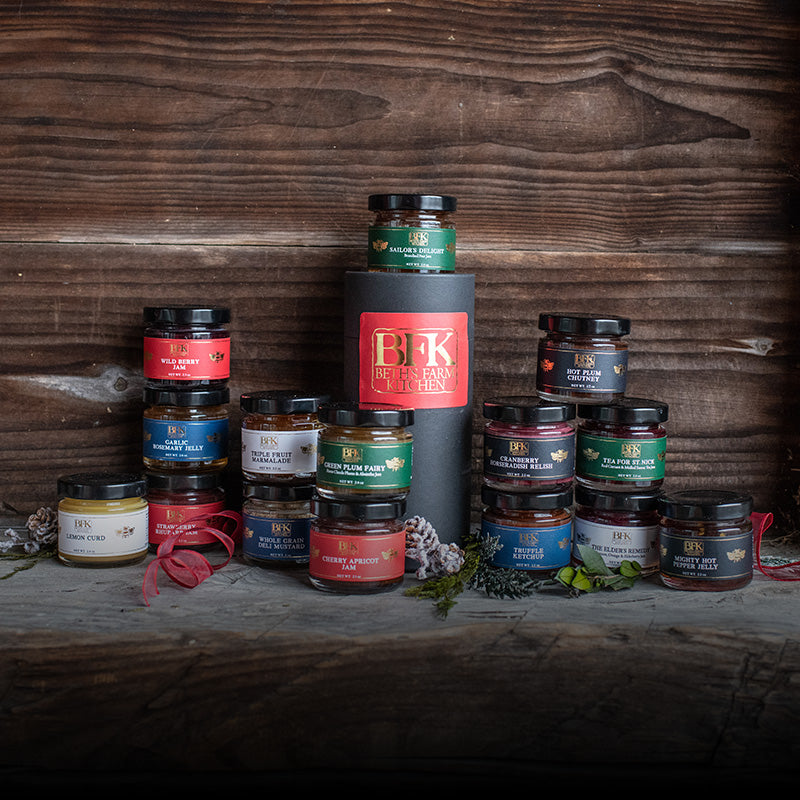
- Jams and preserves
- Fruit spreads and fruit sauces
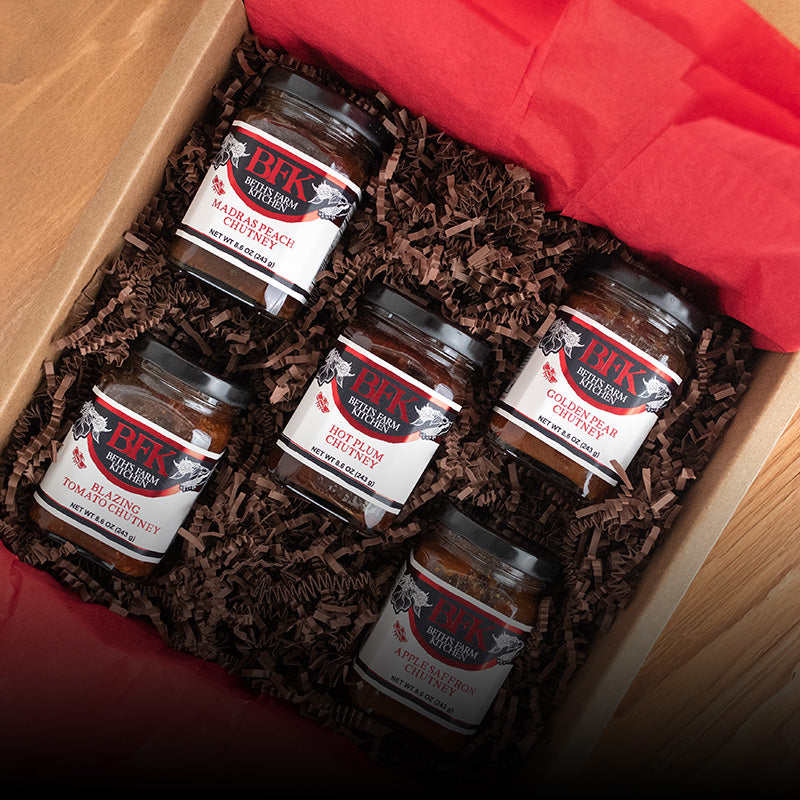
- Chutneys
- Mustards
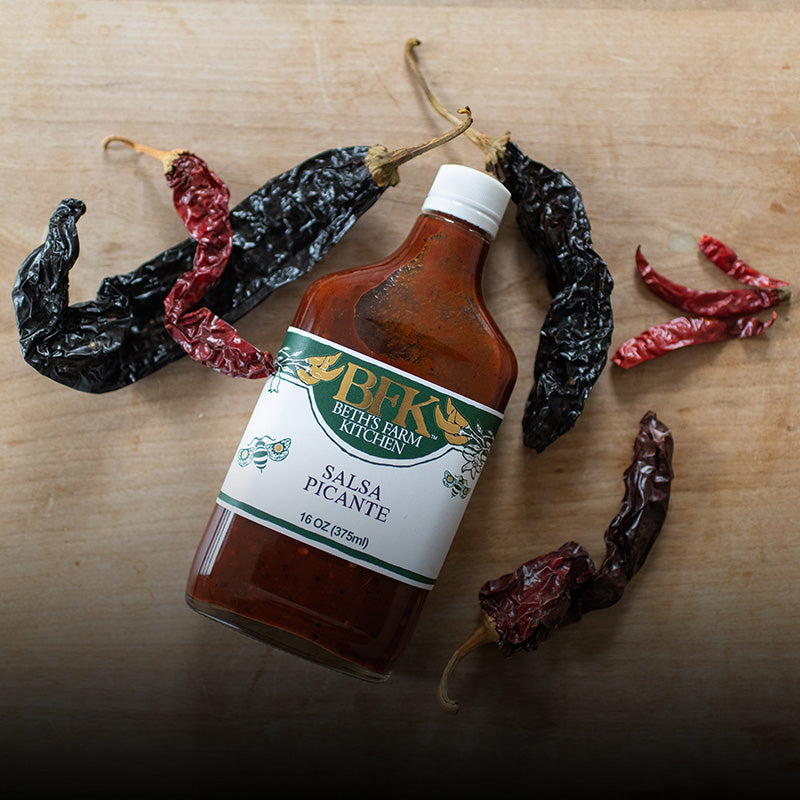
- Hot sauces
- Pepper jellies
- Condiments
- Savory sauces
- Seasonal farm products
- Value-added agricultural products
- Private label or custom-labeled products
- Specialty food gifts
- Small-batch retail food products
We are particularly interested in projects where the ingredient story matters: a farm-grown pepper, a seasonal fruit harvest, a restaurant sauce, a regional product, a family recipe, or a brand idea rooted in real food.
HOW THE PROCESS WORKS
From first conversation to finished product.
Every project is different, but most co-packing and co-manufacturing conversations follow a similar path.
1. Tell us what you are trying to make.
Start by sharing the product idea, recipe, crop, or concept. Tell us what it is, who it is for, where you hope to sell it, and what kind of timeline you have in mind.
2. We review fit and feasibility.
We look at whether the product fits our kitchen, process, equipment, production schedule, and food safety requirements. If it is not the right fit, we will try to tell you that clearly.
3. We discuss recipe, process, and production needs.
This may include ingredients, sourcing, texture, flavor, pH, shelf stability, batch size, packaging format, labeling needs, and how the product should behave once it leaves the kitchen.
4. We help clarify the commercial path.
A food product has to taste good, but it also has to make sense. We can help think through volume, margin, price point, packaging, production cost, and whether the project has a realistic path to market.
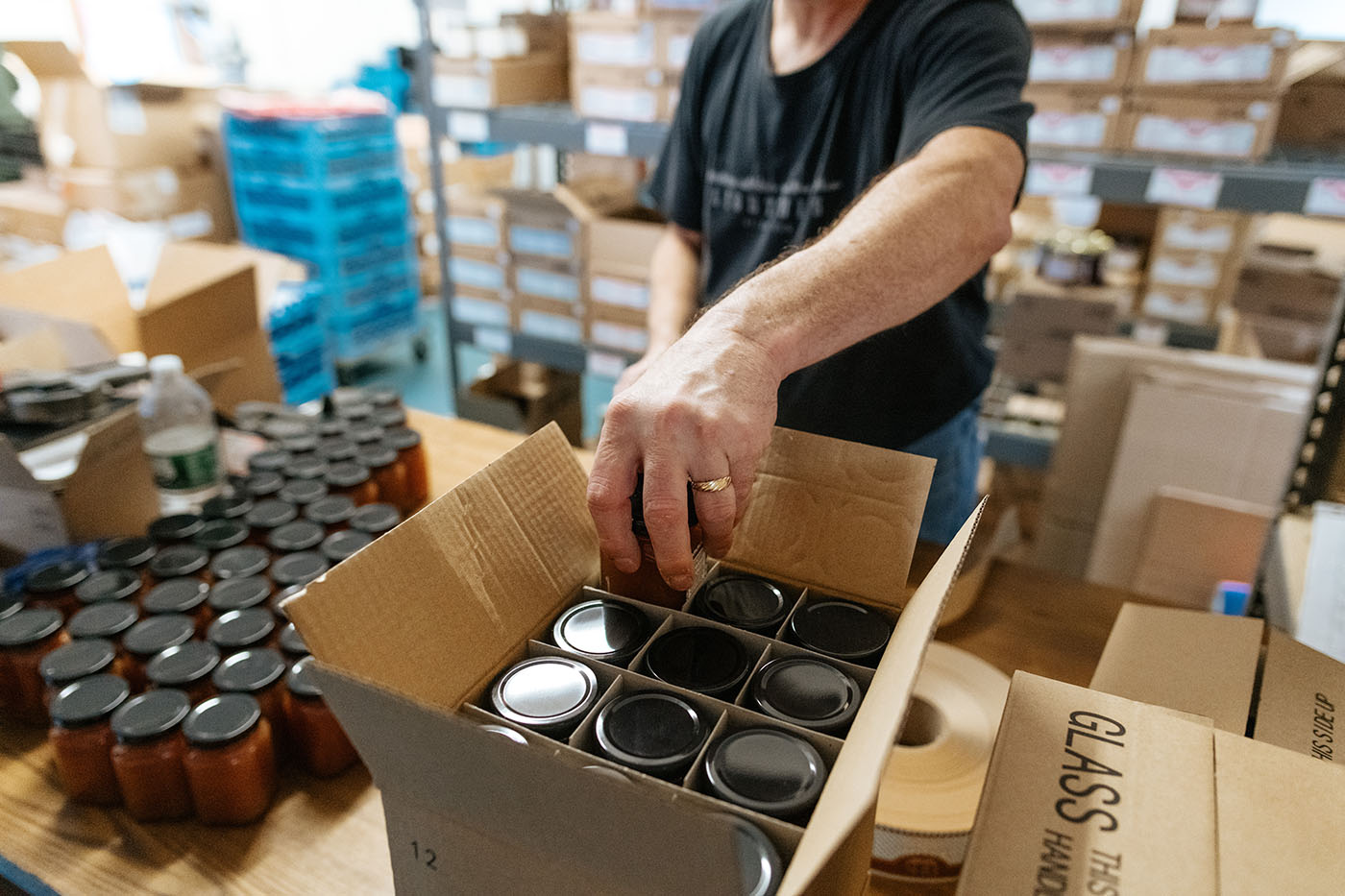
5. We produce, pack, jar, or bottle.
Once the details are clear, we move into production planning and manufacturing. Depending on the project, that may mean a first run, a limited batch, a seasonal production window, or an ongoing production relationship.
6. You take the product into the world.
That might mean online sales, wholesale, farm store retail, restaurant use, gifting, event distribution, or another sales pathway. For some projects, we may also help think through launch strategy, storytelling, or product presentation.
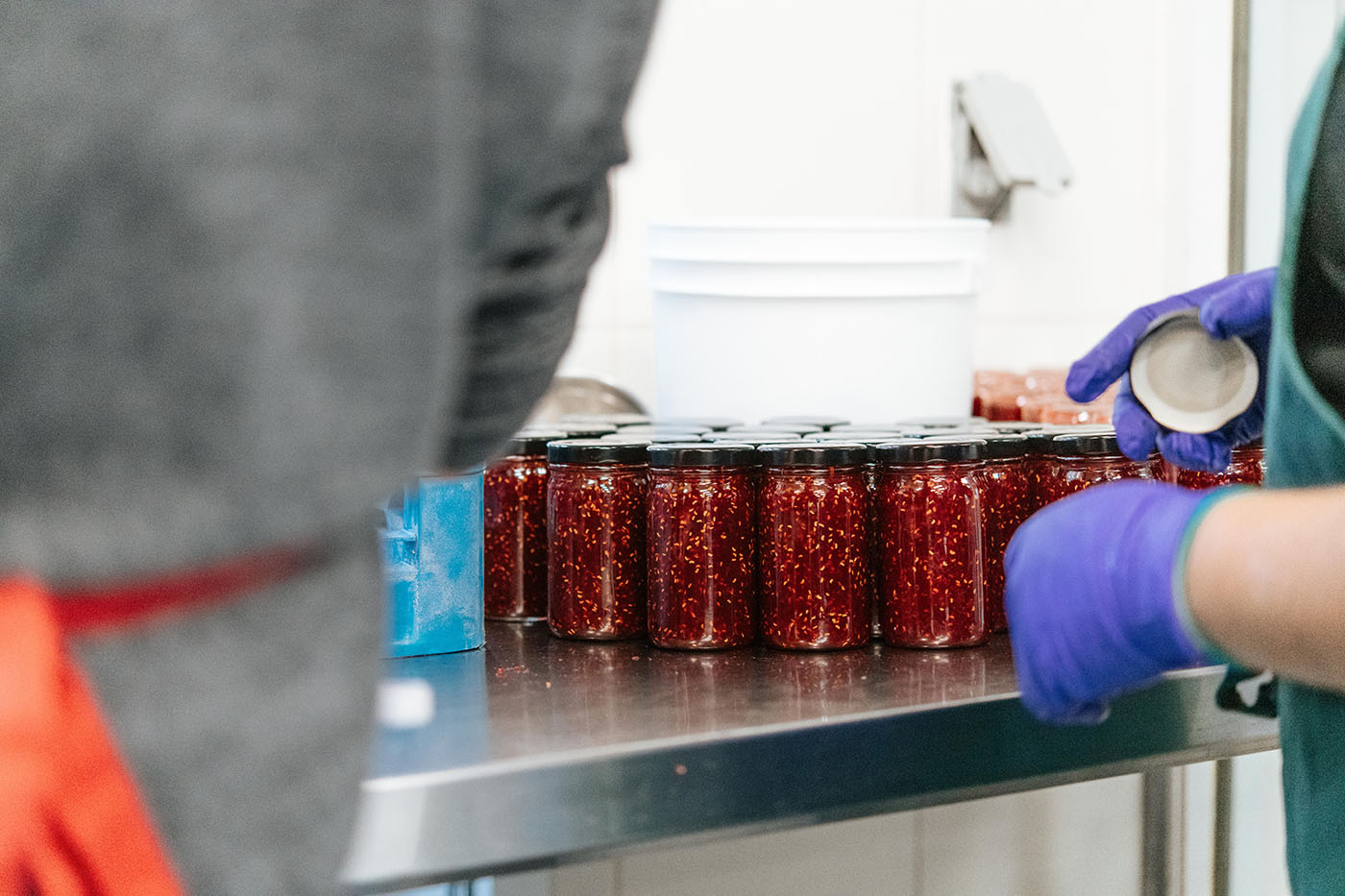
WHAT MAKES BFK USEFUL
Food safety without fear. Production without losing the story.
A lot of food projects get stuck between the idea and the shelf.
The recipe is good, but the process is unclear.
The product tastes right, but the shelf-stability questions feel overwhelming.
The crop is beautiful, but the production plan is missing.
The label looks promising, but the margins do not work.
The founder has energy, but not enough time to learn every piece of food manufacturing alone.
Beth’s Farm Kitchen helps make that middle part less confusing.
We bring together kitchen experience, food safety knowledge, production systems, sourcing relationships, and practical commercial judgment.
We are not here to industrialize the soul out of your product. We are here to help make it real, repeatable, safe, and sellable.
FOOD SAFETY & COMMERCIAL REALITY
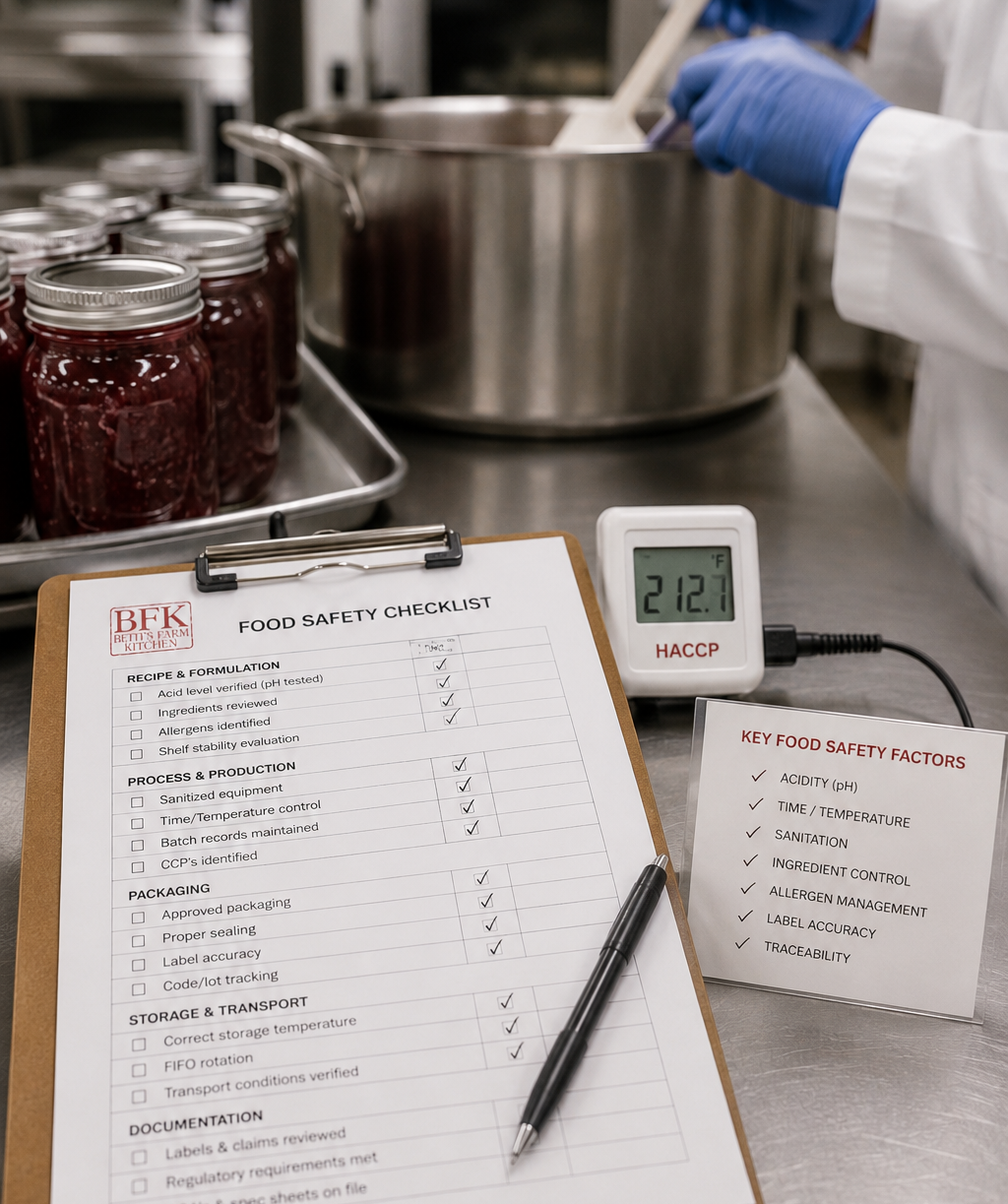
Making food professionally means making it responsibly.
A beloved home recipe is not automatically ready for commercial production.
Commercial food manufacturing requires a clear understanding of ingredients, process, acidity, packaging, storage, labeling, consistency, and regulatory requirements.
That can feel intimidating, especially for farms, chefs, and founders who are new to food production.
We help demystify that process.
We will not pretend every idea is simple. But we can help you understand what questions need to be answered, what steps may be required, and what it will take to move your product toward a professional production run.
VALUE-ADDED AGRICULTURE
Helping farms turn harvests into products.
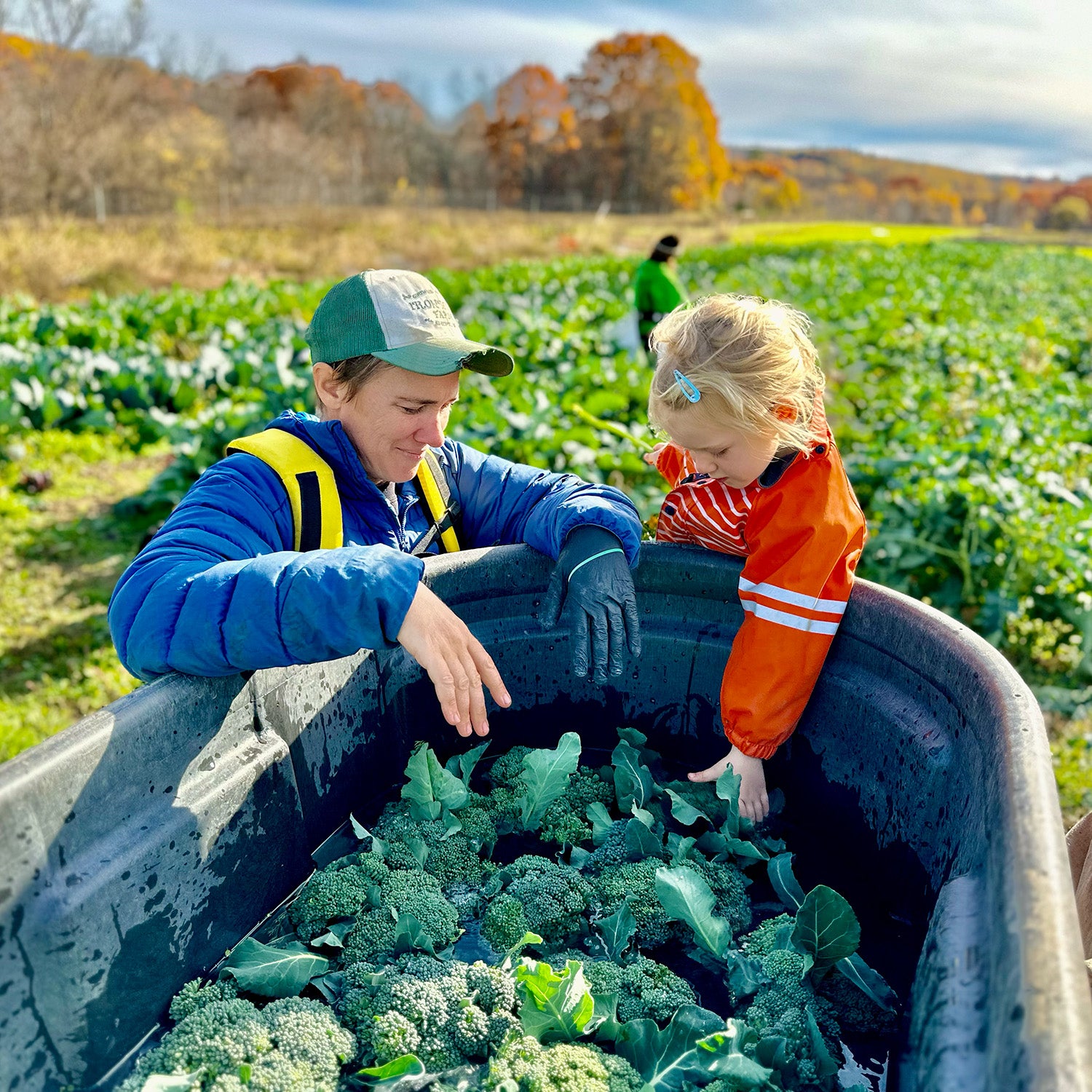
Some of our favorite work happens with farms.
- A bumper crop of peppers can become hot sauce.
- A fruit harvest can become jam, preserves, or fruit sauce.
- A seasonal ingredient can become a branded product with a longer life.
- A farm story can become something customers can hold, open, taste, and share.
Value-added products can help farms reduce waste, extend the season, create new revenue, and deepen the relationship between growers and customers.
But value-added work only succeeds when the product is both meaningful and commercially realistic.
We help farms think through that balance.
Explore Our Farm PartnershipsIS THIS A FIT?
The right kitchen for the right kind of project.
Beth’s Farm Kitchen is a strong fit for many specialty food projects, but not every product belongs in our kitchen.
You have a jam, sauce, condiment, preserve, hot sauce, chutney, mustard, fruit product, or related specialty food idea.
You are a farm with produce you want to turn into a shelf-ready product.
You are a chef or restaurant with a recipe you want to commercialize.
You are a food brand looking for thoughtful small-batch production.
You are ready to talk seriously about volume, cost, pricing, labels, packaging, and timeline.
You care about ingredients, flavor, and making the product well.
Your product requires a production environment we do not support.
You need refrigerated dairy, hummus, fresh dips, or products far outside our process.
You are looking for a very large industrial manufacturer.
You need a one-off hobby batch rather than a commercial product.
You are not yet ready to discuss cost, packaging, volume, or sales path.
Want to explore a project with us? Let's talk.
CASE STUDIES
Real products. Real partnerships. Real paths to market.
Some of our work is private, but when we can tell the story, it shows what this kind of partnership can make possible.
IRONWOOD FARM
From farm-grown peppers to finished hot sauce
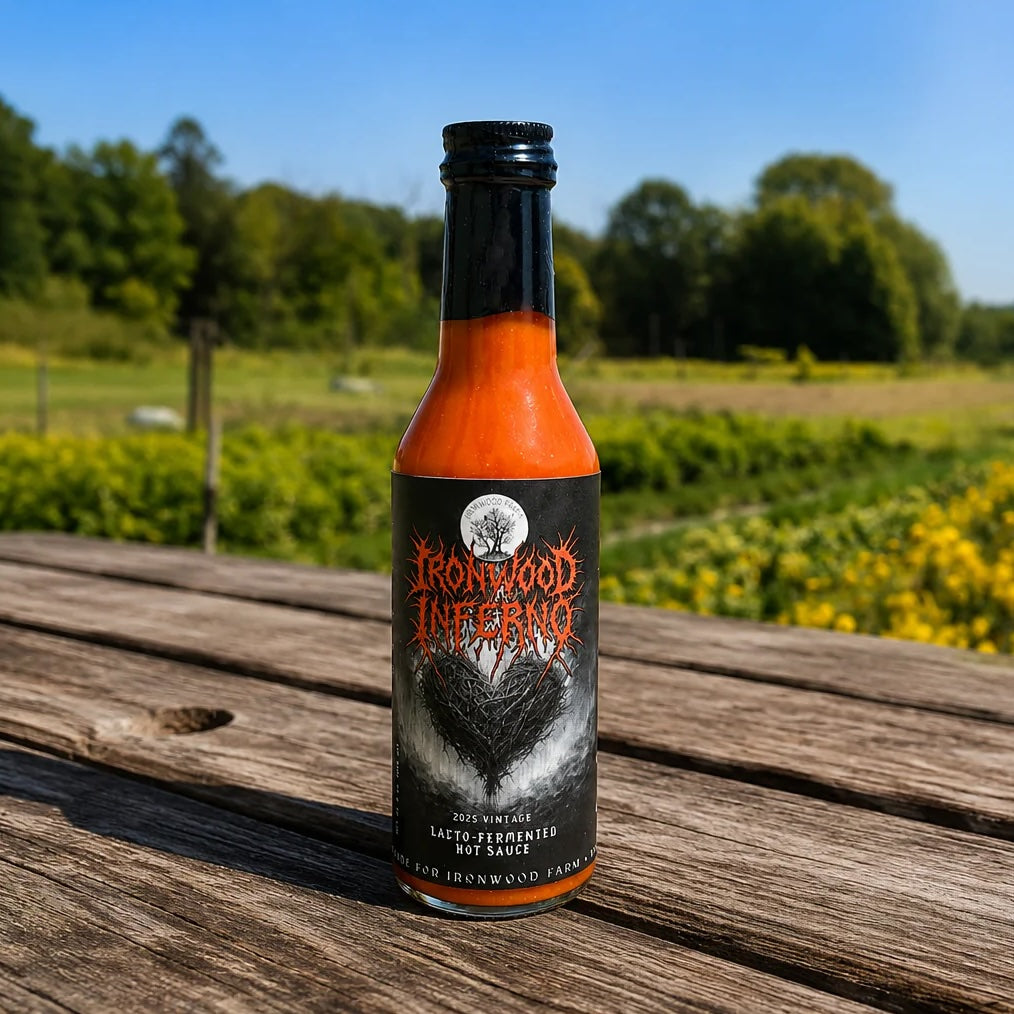
Ironwood Inferno began as a farm-made hot sauce recipe developed over years of growing peppers, fermenting, testing, adjusting, and sharing bottles with friends.
Beth’s Farm Kitchen helped turn that homegrown farm recipe into a commercial, shelf-stable hot sauce ready for retail release.
The project brought together farm-grown ingredients, recipe development, food safety, production planning, bottling, labeling, and launch storytelling.
RELATED SERVICES
Not every project needs co-manufacturing.
Sometimes co-packing is the right path. Sometimes it is private label. Sometimes it is bulk ingredients. Sometimes it is wholesale.
If you are looking for something adjacent, these pages may help:

GET STARTED WITH CO-MANUFACTURING
Let's Talk Co-Packing
You do not need to have every detail figured out before you reach out.
But the more we understand up front, the easier it is to determine whether Beth’s Farm Kitchen is the right fit. Helpful details include:
- Your business name and location
- What kind of product you want to make
- Whether you already have a recipe or formula
- What ingredients or crops are involved
- How you hope to sell or use the product
- Approximate quantity or production goals
- Packaging ideas or requirements
- Timeline
- Any food safety, storage, or shelf-stability questions you already know about
FREQUENTLY ASKED QUESTIONS
FAQs about co-packing and co-manufacturing
Use this text to share information about your product or shipping policies.
What is co-packing?
Co-packing usually means a professional production partner makes and packages your food product for you. You may already have the recipe, brand, label, or sales channel, but you need a kitchen that can produce it safely and consistently.
What is co-manufacturing?
Co-manufacturing is often a deeper production partnership. It may include recipe development, formulation support, production planning, troubleshooting, ingredient sourcing, packaging guidance, and help moving from concept to finished product.
What kinds of products can Beth’s Farm Kitchen make?
We are especially well suited for jams, preserves, fruit spreads, sauces, hot sauces, chutneys, mustards, pepper jellies, condiments, and related specialty food products.
If your product is similar to those categories, it may be a good fit.
Can you help turn a home recipe into a commercial product?
Potentially, yes. Many good products start as home recipes, farm recipes, or restaurant recipes. We can help you understand what may be needed to move from a home recipe to a professional production process.
That may include recipe review, process development, sourcing, food safety considerations, packaging, and production planning.
Can you help farms make value-added products?
Yes. We work with farms and agricultural partners who want to turn seasonal crops into shelf-ready products like jams, sauces, hot sauces, preserves, chutneys, and other specialty foods.
Do you help with food safety?
Yes, food safety is a central part of commercial food production. We can help you understand the food safety questions that apply to your product and what may be required before production.
Do you help with labels and packaging?
We can help discuss labeling and packaging needs as part of the production process. Depending on the project, you may need to provide approved labels, packaging, barcodes, or other brand assets before production.
What is the minimum order quantity?
Minimums vary by product, process, packaging, and project type. The best way to begin is to send us the product details and approximate volume you have in mind.
How long does the process take?
Timeline depends on the product, recipe readiness, packaging, ingredients, food safety requirements, and production schedule.
Some projects can move quickly. Others take more time, especially if recipe development, label creation, sourcing, or testing is needed.
Can you make products for businesses outside the Hudson Valley?
Yes. Beth’s Farm Kitchen is based in the Hudson Valley, but we can work with farms, food brands, and businesses beyond the region depending on product fit, shipping needs, timeline, and production requirements.
Can you guarantee my product will be profitable?
No. We cannot guarantee sales or profitability.
But we can help think through commercial realities like cost, packaging, production volume, pricing, and whether the product has a realistic path to market.
What if I am not sure whether I need co-packing, private label, or bulk ingredients?
That is very common.
If you have your own recipe, crop, or product idea, co-packing or co-manufacturing may be the right path.
If you want your brand on an existing Beth’s Farm Kitchen product, private label may be a better fit.
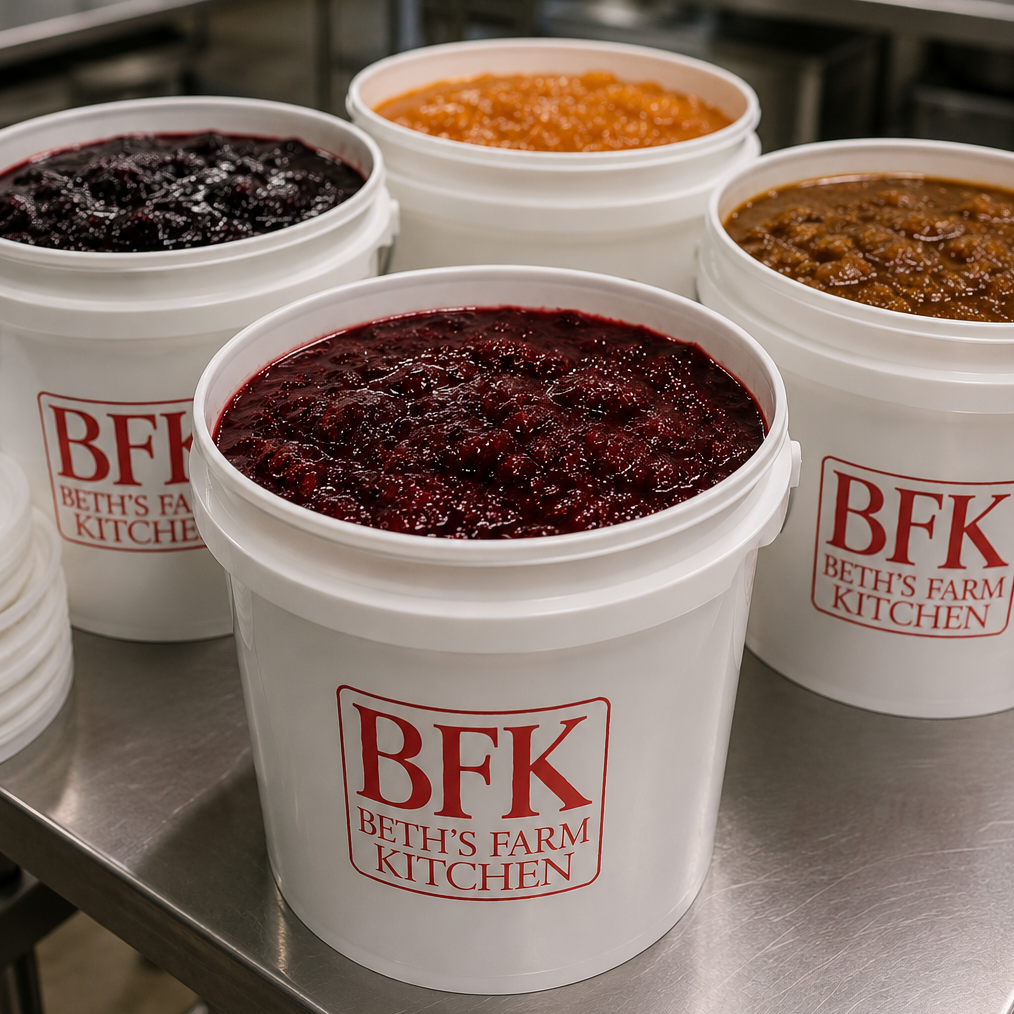
If you need bulk jam, fillings, sauces, or ingredients for your bakery or kitchen, start with Food Service & Bulk Ingredients.
Start with an inquiry and we can help point you in the right direction.