How Beth’s Farm Kitchen Helped Bring a Homemade Hot Sauce to Life
For years, Ironwood Farm made hot sauce the same way many farmers and food people do: at home, in small batches, constantly tweaking recipes, sharing bottles with friends, and talking endlessly about flavor.
The sauce was real. The obsession was real. But turning a beloved homemade recipe into a food-safe, shelf-stable product that could actually live on store shelves is an entirely different process.
That’s where Beth’s Farm Kitchen came in.
What started as a hot sauce collaboration became something bigger: a reminder of what’s possible when farms and food makers trust each other, share values, and work closely together to bring good food into the world.

A Relationship That Started Long Before the Sauce
This partnership didn’t begin with a business pitch.
Lauren and Jonney of Ironwood Farm first farmed alongside Jodie and Guillermo years ago at Four Door Farm in Portland, Oregon. Long before Ironwood Farm existed in New York’s Hudson Valley, relationships and trust were already being built through shared work in the fields.
Over time, both farms evolved in different directions.
Ironwood Farm focused on certified organic vegetable production in the Hudson Valley, while Beth’s Farm Kitchen grew into a respected value-added food business with deep experience in shelf-stable products, commercial production, and food safety systems.
The hot sauce project brought those paths back together.
That shared history mattered. Communication felt easy from the start, and the process felt collaborative rather than transactional.

The Leap From Home Kitchen to Retail Shelf
Many farms have recipes people love.
Very few know how to turn those recipes into products that can be safely and consistently produced for wholesale or retail.
The gap between:
“This tastes incredible at home”
and
“This can legally and safely be sold in stores”
…is much bigger than most people realize.
There are questions around:
- shelf stability
- acidity
- labeling
- ingredient sourcing
- packaging
- production scaling
- pricing
- food safety compliance
- consistency from batch to batch
For many small farms, the process feels intimidating enough that ideas never move beyond the kitchen table.
Beth’s Farm Kitchen helped make the entire process feel approachable.

From Idea to Finished Product in About Six Weeks
One of the most surprising parts of the collaboration was how quickly the project came together.
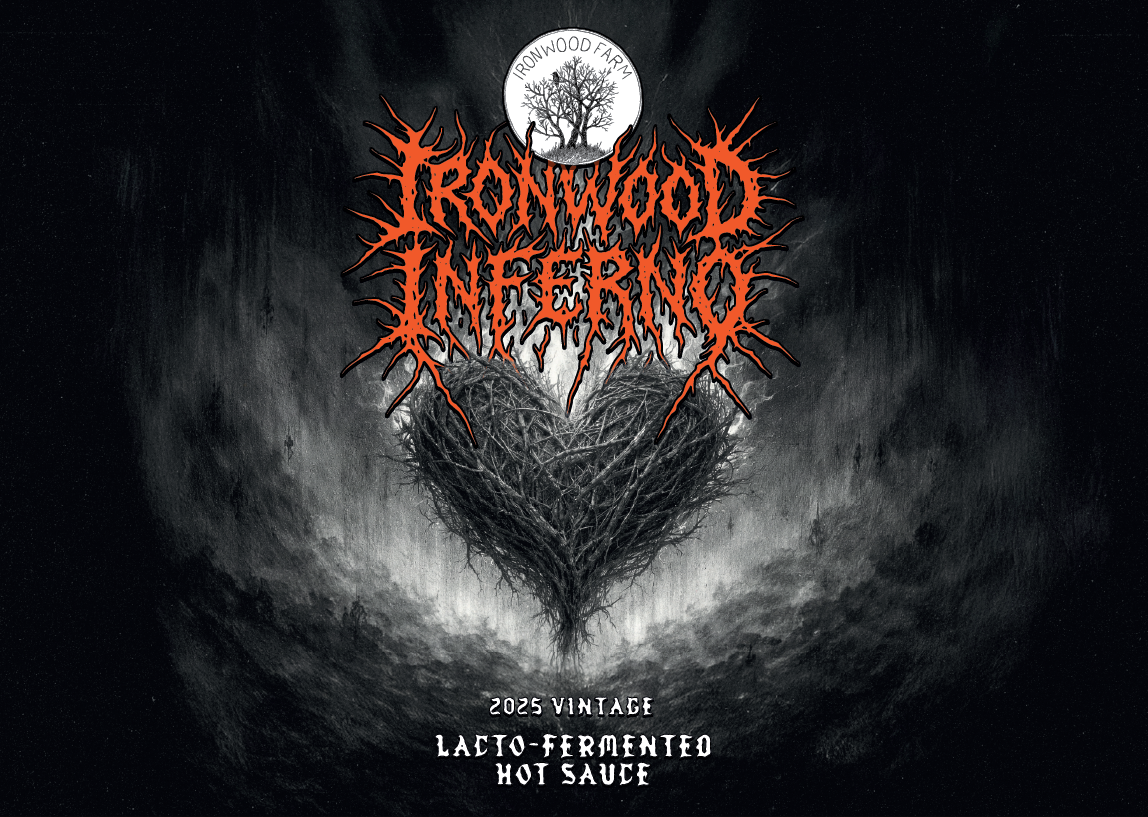
From initial planning to finished bottled product, Ironwood Inferno moved from concept to commercial release in roughly six weeks.
That speed came from:
- clear communication
- organized systems
- production experience
- practical guidance
- openness to collaboration
At every stage, Beth’s Farm Kitchen helped break complicated decisions into manageable steps.
Discussions covered:
- fermentation
- acid balancing
- shelf stability
- ingredient sourcing
- packaging
- labeling
- scaling recipes for production
- how commercial kitchen workflows actually function
Nothing felt hidden behind technical language or unnecessary complexity. The process felt grounded, transparent, and collaborative.

Protecting the Soul of the Original Recipe
One of the biggest fears when scaling any homemade food product is losing what made it special in the first place.
A sauce that tastes incredible in a home kitchen does not always behave the same way in commercial production. Ingredients react differently. Fermentation changes. Acidity shifts. Texture changes. Heat changes.
From the beginning, Beth’s Farm Kitchen approached development carefully.
The goal was never to replace Ironwood Farm’s recipe. The goal was to preserve the identity of the sauce while helping it become food-safe and shelf stable.
That process involved:
- tasting sessions
- recipe adjustments
- acidity testing
- fermentation evaluation
- texture refinement
- ingredient trials
- long conversations about flavor and heat balance
The final sauce still tasted unmistakably like Ironwood Inferno:
- floral
- fruity
- fermented
- slow-building
- deeply layered
Just now in a form that could confidently live on store shelves.

Ingredient Choices That Matched the Philosophy
One of the most valuable parts of the collaboration was ingredient sourcing guidance.
Beth’s Farm Kitchen immediately understood that sourcing decisions were not only about cost. They were also about:
- flavor
- integrity
- consistency
- ethics
- long-term sustainability
One of the defining moments in development came during vinegar testing.
Several options were tried, but champagne vinegar ultimately gave the sauce the exact structure Ironwood Farm was looking for:
- bright without being harsh
- sharp but balanced
- supportive rather than overpowering
The result elevated the final flavor while still keeping the product realistic to produce at scale.
That balance matters deeply for small farms trying to create products that are both delicious and financially sustainable.

Making Food Safety Feel Human
For many farmers, food safety requirements can feel overwhelming and difficult to navigate.
Beth’s Farm Kitchen made the process feel understandable instead of intimidating.
Rather than treating compliance as bureaucracy, they approached it as part of building a thoughtful and consistent food business.
The conversations focused on:
- producing safely
- creating consistency
- protecting customers
- building confidence in the process
- creating something that could realistically grow over time
This included guidance around:
- shelf stability
- acidification
- safe bottling practices
- ingredient handling
- packaging
- labeling requirements
- production workflows
The process became educational rather than stressful.

Building Something That Could Actually Last
One of the most important outcomes of the project was realizing that a value-added product could become a meaningful part of a farm’s future.
Ironwood Inferno quickly became one of the strongest products Ironwood Farm had ever developed.
Beth’s Farm Kitchen helped shape:
- pricing structure
- packaging decisions
- production quantities
- wholesale readiness
- product positioning
- realistic production planning
The goal was not simply to make a beautiful bottle of hot sauce.
The goal was to make something sustainable. Something that could continue to grow while still feeling rooted in the farm and the original recipe.

Opening New Doors for Small Farms
Before this project, Ironwood Farm primarily operated as a respected local vegetable farm.
Now, with a professionally produced shelf-stable product, entirely new opportunities became possible:
- wholesale accounts
- regional grocery partnerships
- year-round revenue
- expanded retail opportunities
- broader brand reach
For many farms, value-added products create an entirely different economic model. They allow farms to extend the life of their ingredients, tell deeper stories through food, and create products that travel far beyond the farm stand.
Beth’s Farm Kitchen helped make that transition feel achievable.

Why the Collaboration Worked
At its core, this project worked because both businesses shared similar values:
- respect for ingredients
- respect for process
- respect for flavor
- respect for relationships
Nothing about the collaboration felt transactional.
Beth’s Farm Kitchen didn’t simply manufacture a sauce. They helped translate years of experimentation, farming, and care into a finished product that could confidently enter the marketplace while still feeling deeply personal and authentic.
For Ironwood Farm, the project changed what feels possible.

Looking Forward
Ironwood Inferno may be the first collaboration between Ironwood Farm and Beth’s Farm Kitchen, but it likely won’t be the last.
More importantly, the project shows what can happen when farms and value-added producers work together closely, honestly, and creatively.
Good food starts with good ingredients.
But sometimes it also starts with good partnerships.